Showing posts with label checkers. Show all posts

Saturday, August 17, 2024


Checkers Game: Winning Rules and Tactics

Introduction

Checkers is a classic board game loved by many people around the world. It has a long history that goes back to the 12th century. The rules of checkers seem easy, but to really get good, you need to think strategically and be aware of the moves your opponent might make. This guide will help both beginners and more experienced players improve their game of checkers. You will learn new skills and tips that can take your checker game to the next level.

King vs. Regular Pieces: Rules and Strategies

A king, also called a "crowned" piece, has a big edge over normal checkers. This is because it can move more easily. Getting to the king row on the other side of the board is the main goal for every player.

When you start, it can be smart to wait before crowning your checkers. Instead, try to build a good position in the center of the board. This can make your opponent make bad trades that weaken their side.

Once you are in a strong position, you can start to push for kings. At the same time, make sure to protect your own king row from your opponent. Keep in mind that the player with the most kings usually wins in the endgame.

Opening Moves: Setting the Stage for Victory

The first moves in checkers are very important. They can change how the game works out. There are many ways to start, but the key is to control the center early. A good way to do this is by moving your checkers from the sides to the center.

Don't put your pieces too close together. This makes them an easy target for double jumps by your opponent. Instead, aim for a balanced setup. This helps you attack and defend well.

A solid start is crucial for a good middlegame and endgame. Don’t just make random moves. Think about what you want to do and plan your opening carefully.

Checkers Game


Defensive Play: Protecting Your Pieces Effectively

While playing aggressively can win games fast, having a strong defense is also very important in checkers. One good way to defend is by forming a solid back row.

Another tactic is to avoid putting your pieces on the edge of the board. Pieces at the edge can’t move much and are easy targets for jumps. Keep your pieces close together and try to keep a strong formation, even when you are under attack.

Don’t ignore how vital defensive play is. Taking good care of your pieces can help you prepare for counterattacks and, in the end, secure a win.

Aggressive Tactics: When to Strike for a Win

Once you learn the basics and get a strong defensive skill, you can start using aggressive tactics to beat your opponent. One great move in checkers is the "double jump." This is when you capture two of your opponent's checkers in a single turn.

Keep an eye out for chances to force your opponent into spots where you can do double or even triple jumps. Sometimes, you might need to give up one of your own checkers to make them take the bait. But, be smart about your attacks. Don’t just give up pieces without thinking about what could happen next.

Always remember, the best move in checkers may not be the easiest to see. Look for clever ways to take advantage of your opponent’s weaknesses and gain the upper hand.

Common Mistakes to Avoid

Even experienced checkers players make common mistakes that can lose them the game. One common mistake is moving pieces too far out. This makes them easy targets for attacks. Another mistake is ignoring the back row.

By knowing these common mistakes, you can avoid them. You can also take advantage of your opponent's errors. Keep in mind that checkers is not just about making great moves. It is also about using your opponent's mistakes to win.

Conclusion

To win at the game of checkers, you need a mix of careful planning and smart moves. You must know when to defend and when to go on the attack. Also, try to avoid common mistakes. Improve your game by practicing and learning from players around the world. This can help you play better. Being able to read your opponent's thoughts can give you an advantage, too. Stay focused and patient. Always work to improve your strategy.

Post by: TreeCardGamesLike us on Facebook!YouTube
Facebook
YouTube

Wednesday, February 7, 2024

Reversi: A Classic Board Game

If you are a board game enthusiast, you must have heard of Reversi. It is a classic game that has been around for centuries and continues to be a popular choice among players. In this post, we will take a deep dive into the world of Reversi and explore its origin, evolution, and why it is still so appealing to players today. We will also cover the core principles of playing the game, including understanding the objective, board layout, and basic rules. For those who want to take their skills to the next level, we will discuss advanced strategies such as mastering flanking techniques, controlling corners, and center control. Lastly, we will look at how technology has transformed the game with online versions that can be played anytime and anywhere and how playing Reversi could potentially enhance cognitive agility. So, sit back, relax and let's explore this classic board game together!

Understanding Reversi

Understanding the start of the game is crucial for mastering Reversi, an abstract strategy board game. The black player makes the first move, strategically placing their first piece to set the game in motion. The game's difficulty level lies in strategically placing pieces in a way that captures your opponent's, reminiscent of checkers but with its own unique twists.

The Appeal of Reversi: Why it is a Classic

With its simplicity and depth, Reversi remains a timeless choice for board game enthusiasts. The game's universal appeal is evident in its ability to engage players of all ages. Whether you're a beginner or an expert, Reversi's balanced gameplay offers a captivating experience. Its strategic depth and replay value contribute to its enduring charm, making it adaptable in both physical and online formats. This abstract strategy board game truly stands the test of time.

The Core Principles of Playing Reversi

Mastering the art of Reversi begins with understanding the core principles of the game. From strategically placing the first player's pieces to controlling the central squares of the board, every single move can determine the outcome. The abstract strategy board game, also known as Othello, requires a high level of skill and the ability to foresee the opponent's moves. With 64 squares of the board and an equal number of pieces for the black and white players, the start of the game sets the stage for a challenging journey into the world of Reversi.

The Objective of the Game

In the abstract strategy board game of Reversi, the objective is to dominate the board by having the most pieces of your color at the end. Players strategically compete to secure control over squares and corners, fostering intense gameplay. The game's end goal revolves around outmaneuvering the opponent and gaining territorial advantage. Understanding this objective is crucial for formulating effective strategies and making the first move count.

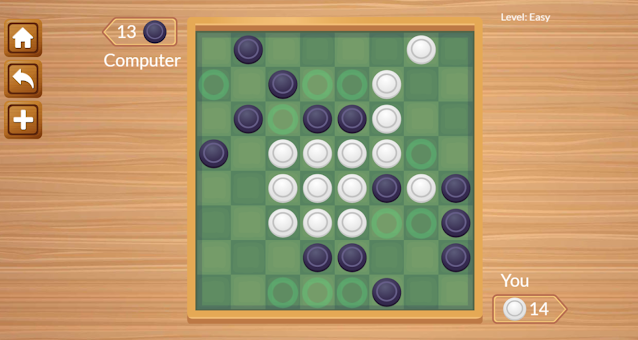
Reversi

Understanding the Reversi Board

Serving as the versatile battleground for the start of the game, the Reversi board is an 8x8 grid that sets the stage for strategic encounters. The board, along with its squares and diagonal lines, influences the difficulty level of the gameplay. The central squares and corners hold pivotal significance, shaping the unfolding drama of strategic maneuvering. Each single move on the board unfolds new tactical possibilities, stimulating the abstract strategy board game's dynamics.

Basic Rules to Follow

The start of the game is crucial in Reversi. Players strategically position their pieces, adhering to the game's rules. The balance of offense and defense fosters engaging gameplay, requiring understanding of effective gameplay strategies. The ruleset forms the foundation for the game's nuanced and tactical gameplay, and the difficulty level adds to its appeal as an abstract strategy board game.

Mastering Flanking: A Key Reversi Move

Strategically positioning pieces to encircle and capture the opponent's pieces is crucial in Reversi. This empowers players to dictate the game's flow and control the board, disrupting the opponent's position and expanding player influence. Flanking is a cornerstone of Reversi gameplay, enabling decisive tactical maneuvers. Understanding flanking's intricacies is essential for mastering the game's strategic depth.

Winning Tactics: Control the Corners

Securing strategic control over the corners provides a significant advantage in Reversi gameplay. The tactic involves leveraging corner positions to influence the game's outcome and outmaneuver opponents. Dominance in these areas allows players to shape the board's dynamics. Mastering the art of corner control is paramount in achieving victory in this abstract strategy board game.

Staying Ahead: The Importance of Center Control

Securing dominance over the central squares is pivotal for gaining an edge in the game. The center of the board presents strategic opportunities for asserting control. Central influence can shape the tempo and trajectory of the game, allowing a player to steer the unfolding dynamics of the board. It's essential for players to prioritize early moves to establish control over the central squares, setting the stage for a commanding position.

Can mastering Reversi strategies enhance cognitive agility?

Mastering strategies in the game of Reversi can enhance cognitive agility by sharpening critical thinking, problem-solving, and decision-making skills. Engaging with Reversi demands mental agility and fosters adaptive and forward-thinking approaches, potentially leading to improved cognitive abilities.

Conclusion

Reversi, a classic board game, has stood the test of time due to its simple yet strategic gameplay. Understanding the origins and evolution of Reversi helps us appreciate its enduring appeal. The objective of the game is to control the majority of the board's squares with your colored pieces. Mastering flanking, winning tactics, and center control are essential for success. With the advent of technology, Reversi has gone digital, allowing enthusiasts to play anytime, anywhere. Additionally, studies suggest that mastering Reversi strategies can enhance cognitive agility. So, whether you're a seasoned player or new to the game, Reversi offers endless hours of entertainment and an opportunity to sharpen your skills.

Thursday, February 10, 2022

From Ancient History to Rock Star Fans – Check out Checkers  

It’s a brand-new year and great to once again be looking forward to all the new and exciting things coming up in the next twelve months. Here at TreeCardGames, we’re thrilled to be expanding our range to include the ever-popular Checkers (also known as Draughts) in our collection, but while Checkers might be new to our catalog, the game itself has been around longer than you probably think.  

Here are a few fun facts about the history of Checkers (Draughts) you might not know already– 

What’s in a name?

So, is it Checkers - or is it Draughts? What you call it depends (these days) on where in the world you come from - Checkers is the US name for the game, and Draughts is the British, although both versions are played in the same way. However, the game itself has been around for thousands of years, with antique versions having been discovered dating back to 4000BC. Throughout history, early versions of Checkers have been known by other names. Originating in the Middle East and played globally, variations on the name include - Alquerque, Quirkat, and Fierges. Despite this, little has changed in the way that it is played or how it looks. The version we know and love today is still strikingly similar to a version found by archaeologists in what was once Ancient Mesopotamia. A few new rules have been added since then, but this is essentially still the pastime enjoyed by many of our earliest ancestors!

 Famous Fans – From Philosophers to US Generals

Checkers has been beloved the world over, partly thanks to being a favorite hobby of some of history’s most influential people. The Greek writer Homer mentioned the game being played in the palaces of Ulysses in the epic poem Odyssey, written in the 8th century. Historical evidence suggests that both Napoleon Bonaparte and the Duke of Wellington enjoyed playing, and US General Ulysses S. Grant praised the checkers as being good for sharpening the mind. More recently, U2 front man Bono has confessed to enjoying a game or two of draughts – his opponent? None other than former Take-That singer Robbie Williams, another celebrity board-game super-fan. 

Checkers Champion of the World

As with many other popular strategy-based games, Checkers has seen a select few players rise to become world champions. Mathematician Marion Franklin Tinsley was considered one of the greatest competitors in history and was called the ‘Beethoven of the checkers’. World champion for almost twenty years, Dr. Tinsley claimed to have spent more than 10,000 hours studying the game while at graduate school. Tinsley once famously defeated the Chinook computer program. Lead programmer for Chinook, Jonathan Schaeffer, calculated that Dr. Tinsley was able to see an incredible 64 moves ahead, allowing him to easily win. 

An ideal choice for players of all ages, checkers is a great introduction to games that promote mathematics, strategy, and planning. While we’re certainly not suggesting you spend 10,000 hours learning how to mastermind your moves like Dr. Tinsley, with a simple layout and easy-to-follow rules,


Checkers is a game we recommend everyone try. Don’t forget to check back regularly for news and updates on TreeCardGames.com and to learn more about the games we love to share with you.